

Kent businesses are drowning in tax complexity.
That was the verdict of many business leaders who think that an over-complicated tax system is holding them back more than high UK taxation, a survey has shown.
The survey of around 400 UK business leaders, by UK top 10 accountancy and business advisory firm Azets, which has Kent offices in Maidstone, Ashford, Canterbury, Tunbridge Wells and Sidcup features in the latest quarterly Azets Barometer of business sentiment.
A total of 54% believe simplifying the tax system should be the government’s first priority, with 47% saying that addressing high corporation tax rates was more important.
HMRC estimates that compliant UK businesses incur £15.4 billion each year in meeting around 2,500 obligations across 27 policy areas.
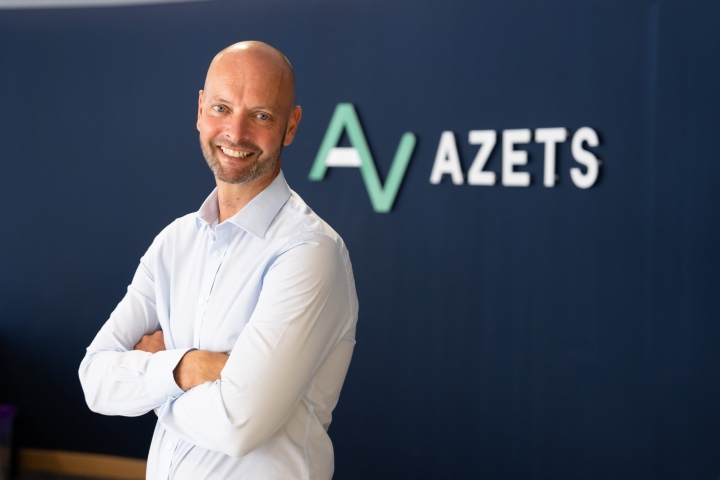
Peter Gallanagh, Azets’ UK & Ireland Chief Executive, said the results show that small and medium business are “drowning in tax complexity”.
He added: “They are not just asking for lower taxes, they are asking for a system they can understand and plan around. Simplifying that red tape would give SMEs greater confidence to invest, hire and grow.”
Less than half (47%) of businesses surveyed said that reducing corporation tax should be the government’s top priority, suggesting that tax simplification overrides tax reduction.
Completing the list of business leaders’ top five demands were reforming business rates (44%), reducing employers’ National Insurance contributions (39%) from the current 15% and expanding capital allowance and investment incentives (38%).
According to the research, businesses are continuing to navigate a challenging operating environment.
The biggest concern is higher labour costs, cited by 43% of respondents, followed by labour skills shortages (39%), geopolitical events (37%), energy prices (37%) and reduced profit margins (35%).
Those pressures are already affecting business decisions.
Over the past 12 months, 45% of UK businesses said they had passed price increases onto customers, 42% had delayed planned capital expenditure or expansion, 38% had restructured or renegotiated supplier contracts, and 35% had frozen new headcount or hiring.
A third (34%) had accepted permanently lower net profit margins, while 28% had taken on additional borrowing to manage cashflow.
Despite the pressure, growth remains on the agenda as 39% of business leaders said growing their businesses through cost-effective means was their biggest strategic priority over the next 12–24 months.
Mr Gallanagh added: “SMEs are still ambitious, but ambition only goes so far when every pound is under pressure, and little is being done by the UK government to help them.
“High costs and tight cashflow are forcing businesses to think twice about hiring and investment. If SMEs are expected to power UK growth, as they have for many years, we need to give them the headroom to do so.”
According to latest annual business activity figures from the Office for National Statistics, as of March 2026, there were 2.79 million VAT and/or PAYE businesses in the UK, with 412,000 (14.8%) in the South East.