

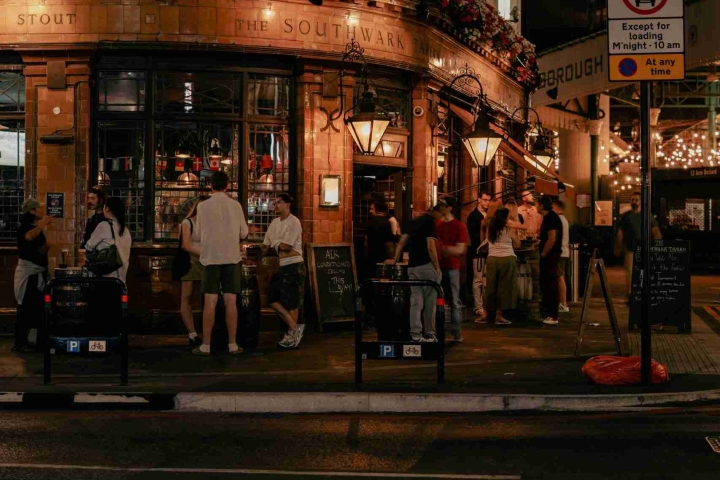
Ahead of Wednesday’s Budget, new CGA by NIQ research reveals the rising cost of going out, as NTIA CEO Michael Kill warns the Chancellor that nightlife businesses can no longer pass increasing operating costs on to consumers.
The Night Time Industries Association (NTIA) has issued a stark warning ahead of Wednesday’s Autumn Budget, declaring that consumers have reached an affordability ceiling when it comes to nightlife, as new research reveals average spending per head has increased by 34% since 2020.
The latest consumer research from CGA by NIQ (NielsenIQ) shows that average reported spending on food and drink in pubs, bars and restaurants has increased from £20.95 in 2020 to £28.06 in 2026, a rise of £7.11 per person.
The findings come at a critical moment for the UK’s night-time economy, with the Chancellor preparing to deliver the Budget against a backdrop of continued pressure on businesses and household finances.
The NTIA warns that higher consumer spending should not be mistaken for a stronger or more profitable nightlife sector. Instead, the increase reflects a period in which operators have faced escalating costs across employment, energy, taxation, business rates and supplies, forcing many to increase prices to remain viable.
However, the research also reveals a marked slowdown in spending growth, with average expenditure per head increasing by just 2.1% between 2025 and 2026.
In London, spending has effectively plateaued, moving from £30.09 in 2025 to £30.08 in 2026.
For the NTIA, these findings provide a clear warning ahead of the Budget: the ability of nightlife businesses to recover rising operating costs through higher consumer prices is becoming increasingly constrained.
The association believes consumers have now reached an affordability ceiling, leaving operators caught between continuing cost increases and the risk of pricing customers out of the night-time economy altogether.
Michael Kill, CEO of the Night Time Industries Association, said:
“This week’s Budget comes at a defining moment for British nightlife.
“For years, nightlife businesses have faced relentless increases in the cost of operating, from energy and employment to taxation, business rates and supply chains. Many have had no choice but to pass some of those costs on to consumers simply to keep their doors open.
“But the reality is that consumers have now hit an affordability ceiling.
“People are paying significantly more for a night out than they were just a few years ago, and the latest figures show that growth in spending is slowing dramatically.
“That should send a very clear message to the Chancellor. The consumer cannot be the industry’s financial shock absorber indefinitely.
“We are now at a point where businesses cannot afford to absorb further costs, but customers cannot afford to keep paying more.
“This is a fundamental economic challenge for the night-time economy. When operating costs increase, prices inevitably come under pressure. But when consumers reach their spending limit, that mechanism breaks down.
“The result is a sector being squeezed from both sides, with operators facing rising financial obligations while their customers have less disposable income available to spend.
“The Chancellor must recognise that the affordability of nightlife is directly linked to the cost of operating nightlife businesses.
“Without meaningful action on business rates, employment-related costs and the wider tax burden, we risk creating a situation where going out becomes increasingly unaffordable and operating a nightlife venue becomes commercially unsustainable.
“This Budget must address the pressures at source rather than leaving businesses with no alternative but to increase prices.
“Nightlife is not a luxury reserved for those who can afford ever-increasing costs. It is an essential part of our social infrastructure, cultural identity and local economies.
“Consumers have reached their ceiling. Operators have reached theirs. The Budget must recognise that the sector has nowhere left to pass the pressure.“
Budget must recognise the link between operating costs and consumer affordability
The NTIA believes the research highlights a critical issue for fiscal policy: measures that increase the cost of operating nightlife businesses can ultimately contribute to higher prices for consumers.
Where businesses are unable to recover these costs, they face further pressure on margins, investment, staffing and long-term viability.
For pubs, bars, nightclubs, live music venues and late-night cultural spaces, the consequences extend beyond individual businesses.
An increasingly unaffordable night-time economy risks reducing participation in nightlife, weakening town and city centres and threatening the social and cultural spaces that support communities across the country.
The association is urging the Chancellor to consider the cumulative impact of business taxation and operating costs when determining the measures announced in Wednesday’s Budget.
Rising expenditure is not evidence of rising prosperity
The CGA by NIQ findings also highlight the importance of distinguishing between increased consumer expenditure and genuine economic growth.
While consumers report spending substantially more per visit than in 2020, the figures do not establish whether venues are attracting more customers, selling greater volumes or achieving improved profitability.
Indeed, rising expenditure may reflect higher prices rather than increased consumption.
With reported spending growth slowing, the NTIA believes the findings reinforce its warning that further price increases could become increasingly difficult to sustain.
The association says Wednesday’s Budget represents an important opportunity to address the underlying pressures facing nightlife businesses and help protect the affordability and accessibility of going out.
The message ahead of the Budget is clear: the cost of nightlife cannot continue to rise indefinitely, and consumers cannot continue to carry the burden of escalating operating costs.