
More than one million schoolchildren are estimated to have dyslexia, yet many children and adults live with the condition without a diagnosis or the support they need. Across education and beyond, the way information is presented and accessed can create barriers for people whose experiences of reading, writing and processing information differ from the norm.
A new exhibition at the University of Brighton is putting those experiences under the spotlight, using objects, craft and making to explore how dyslexia and functional illiteracy can affect educational opportunities, confidence, perceptions of ability and participation in wider society.
‘Making as Enquiry: Dyslexia, Functional Illiteracy, and Alternative Ways of Knowing’ is the work of Chris Hamer, who is studying for a master’s degree in Sustainable Design. Chris draws on his own lived experience to ask a fundamental question: whose ways of knowing are recognised and valued?
Open to the public from 5–11 September at the 1st Floor Gallery of the University’s Edward Street building, the free exhibition challenges the idea that literacy difficulties are simply individual deficits. Chris uses a practice-led approach to examine how educational, professional and institutional systems can create or reinforce barriers for people with dyslexia and functional illiteracy.
The exhibition reflects the University of Brighton’s wider commitment to equity and ensuring that students from all backgrounds can reach their full potential. More than a third of Brighton students declare a disability or mental health condition, and inclusive learning is embedded across the university’s approach to teaching and learning, alongside specialist support for students who need it.
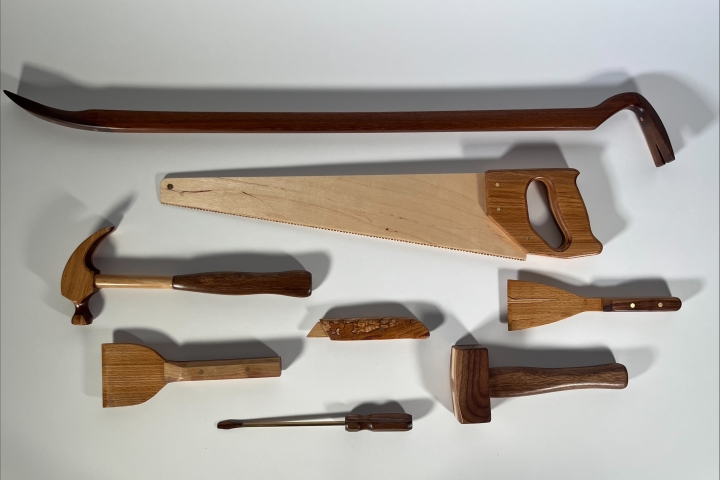
Chris, who was diagnosed with dyslexia at eight years old, said: “I have struggled with literacy my whole life, often being shamed because of misconceptions around my ability. I received my diagnosis in the 1990s, at a time when there was less awareness about the condition. Now, my work explores how experiences that can be difficult to communicate through text can instead be expressed through making. Making is central to my research. Through working with materials, I explore the slow and reflective nature of craft which allows knowledge to emerge through objects, processes, and material engagement.
“The artefacts I create become a form of communication, holding and expressing experiences that are often overlooked within traditional academic and professional frameworks. By embracing the unpredictability and resistance of materials, I seek to transform complex social issues into tangible forms that encourage conversation. My aim is to invite people to reflect on how knowledge is created, valued, and shared, and to consider whose experiences and ways of knowing are recognised, legitimised, or excluded.”
Dyslexia is primarily associated with difficulties in building reading and spelling skills, but its impact can extend into other areas, including processing speed, working memory and reading comprehension. The British Dyslexia Association estimates that 10% of the UK population is dyslexic, including more than one million schoolchildren – roughly three in every class – with many undiagnosed.
For those affected, support and adjustments can make a significant difference. Dyslexia is recognised as a disability under the Equality Act 2010 where it has a substantial and long-term adverse effect on day-to-day activities, and education providers have a duty to make reasonable adjustments for disabled students. These can include alternative ways of recording information, assistive technology, additional time and changes to how information is presented.
But Chris’s project asks audiences to look beyond adjustments and consider the deeper assumptions built into systems of education and work. The work also examines how experiences of dyslexia and functional illiteracy intersect with negative outcomes affecting men, including educational disengagement, social exclusion, limited opportunities and pressures around identity and masculinity.
The project forms part of Collected Futures, the 2026 Sustainable Design MA show, which brings together work by graduating postgraduate design researchers exploring contemporary social and environmental challenges and imagining possibilities for more sustainable futures.
Dr Sally Sutherland, Course Leader for the Sustainable Design MA at the University of Brighton, said: “I am immensely proud of what the students have achieved with Collected Futures. It brings together an extraordinary diversity of artefacts and ideas, demonstrating how these emerging design researchers are questioning some of the pressing and complex challenges facing society and to imagining more sustainable futures. There is some incredibly exciting and important work on display.”
Making as Enquiry: Dyslexia, Functional Illiteracy, and Alternative Ways of Knowing will be on display from 4–11 September at the University of Brighton’s 1st Floor Gallery, Edward Street, Brighton, BN2 0JG.university-of-brighton-dyslexia-exhibition-chris-hamer
The exhibition is free and open Monday to Saturday, 10am–5pm, with a private view taking place on Friday 4 September, 5–8pm.