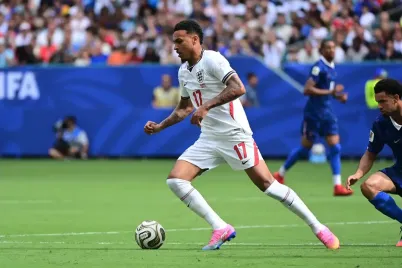

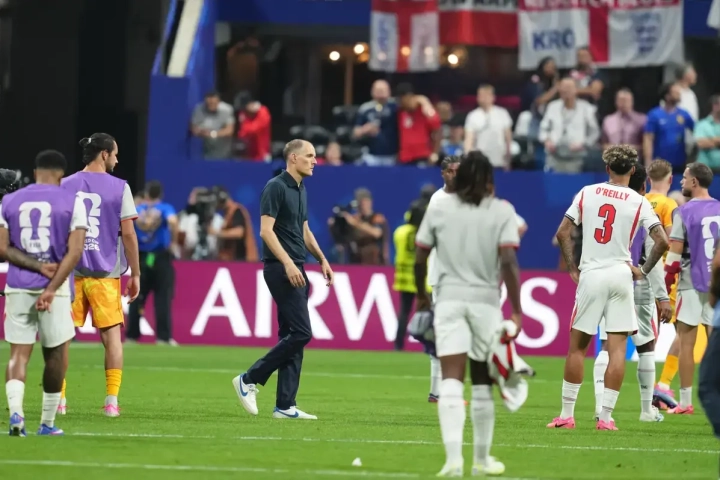
For thirty minutes following Anthony Gordon’s clinical breakthrough in the 55th minute last night, England stood on the absolute precipice of sporting immortality. Operating with a disciplined mid-block that neutralised the creative spaces at the Mercedes-Benz Stadium, Thomas Tuchel’s side looked structured, resilient, and entirely capable of booking their place in Sunday’s World Cup final against Spain. Yet, international football at the absolute highest level is a fundamentally unforgiving environment. A devastating final ten minutes saw that meticulously crafted defensive facade completely disintegrate.
Enzo Fernández’s 85th-minute equaliser and Lautaro Martínez’s dramatic stoppage-time winner condemned England to a heartbreaking 2-1 defeat, extending the nation’s historical World Cup hoodoo against Argentina. While the emotional fallout will dominate the back pages, the cold reality of England’s exit lies buried deep within the data. This was a defeat born out of a stark, measurable shift in tactical control during the final third of the match.
By analysing the statistical markers of last night’s encounter, we can pinpoint exactly where Tuchel’s strategic blueprint faltered and evaluate how alternate decisions could have altered the outcome of this monumental semi-final.
The Tale of Two Halves: A Statistical Overview
The narrative of the match is starkly illustrated by dividing the 90 minutes into two distinct phases: the period of structural parity leading up to the 70th minute, and the subsequent total surrender of territory that defined the closing exchanges.
During the opening hour, England executed a masterclass in controlled counter-pressing. They restricted Argentina to low-value opportunities while utilising the direct verticality of Gordon and Bukayo Saka to stretch the South American defensive line. However, the physical toll of Saturday’s gruelling 120-minute quarter-final against Norway rapidly caught up with the midfield engine room.
| Match Metric | Minutes 1–70 | Minutes 71–95 |
| England Possession % | 47% | 29% |
| Argentina Possession % | 53% | 71% |
| Shots (England / Argentina) | 7 / 6 | 0 / 11 |
| Pass Accuracy in Opp. Half (England) | 79% | 54% |
| PPDA (Passes Per Defensive Action – England) | 9.4 | 18.2 |
| Expected Goals (xG) – England | 1.14 | 0.00 |
| Expected Goals (xG) – Argentina | 0.58 | 1.62 |
The data in the table exposes the systemic nature of England’s collapse. The most damning metric is the Passes Per Defensive Action (PPDA). Prior to the 70th minute, England’s PPDA stood at a highly proactive 9.4, indicating an aggressive, well-coordinated press that disrupted Argentina’s build-up play. In the final 25 minutes, that number skyrocketed to 18.2. This statistical shift confirms that England entirely abandoned their high-intensity closing down, retreating into a passive low block that practically invited Lionel Scaloni’s side forward.
Where the Blueprint Faltered: The Midfield Suffocation
The primary tactical objective for England was to starve the supply line to Argentina’s creative hubs. For long stretches, the double pivot of Declan Rice and Jude Bellingham performed this task with immense discipline, keeping the central corridors highly compacted.
However, as fatigue accumulated, the distance between England’s defensive line and their midfield unit began to widen. After the 70th minute, tracking data revealed that the average distance between John Stones and Declan Rice increased from a compact 12 metres to an incredibly dangerously disjointed 24 metres.
Argentina’s central conductors ruthlessly exploited this structural disconnection. Enzo Fernández, who had been heavily constrained by Mainoo and Rice in the first half, suddenly found himself with time to lift his head. In the final third of the match, Fernández completed 28 progressive passes, compared to just nine in the opening hour. By dropping so deep, England surrendered the vital “Zone 14”, the central area right outside the 18-yard box. It was precisely from this zone that Fernández orchestrated the sequence that led to his own 85th-minute equaliser, arriving entirely unmarked to fire past Jordan Pickford.
The Substitution Dilemma: Retreating Into Danger
Tuchel’s in-game management during the closing stages will undoubtedly face intense analytical scrutiny. The decision-making process from the technical bench appeared driven by a desire to preserve the 1-0 advantage through defensive accumulation rather than maintaining tactical ball control.
The withdrawal of Anthony Gordon in the 74th minute served as the definitive turning point in the match’s psychological and tactical landscape. While Gordon was visibly exhausted after his immense physical exertions, his departure completely eliminated England’s primary outlet for direct counter-attacks. With no threat of vertical speed over the top, Argentina’s center-backs felt completely emboldened to push into the central circle, squeeze the pitch, and compress England inside their own defensive third.
England Tactical Shape (Minutes 1-70): Proactive Mid-Block
   [Saka]         [Kane]         [Gordon]
          [Bellingham]   [Mainoo]
                  [Rice]
[Spence]    [Stones]     [Guéhi]    [O'Reilly]

England Tactical Shape (Minutes 71-95): Deep Passive Low Block
                  [Kane]
          [Bellingham]   [Eze]
    [Spence]   [Rice]   [Henderson]   [O'Reilly]
         [Chalobah]  [Stones]  [Guéhi]
By introducing Trevoh Chalobah and switching to a rigid back five, Tuchel inadvertently signaled a total retreat. The statistical consequence was immediate: England’s passing accuracy in the opposition half plummeted to a miserable 54% as clearing clearances replaced constructive transition play.
Harry Kane became entirely isolated up front, touching the ball only twice in the final twenty minutes of the contest. The inclusion of Jordan Henderson was intended to bring veteran leadership and stability, but it lacked the press-resistance that Kobbie Mainoo had provided earlier in the evening. When facing an aggressive counter-press, Henderson and Rice repeatedly turned over possession, failing to string together the three or four consecutive passes required to alleviate the suffocating pressure.
What England Could Have Done Differently
Hindsight is an easy tool for critics, but a tactical audit highlights two clear, alternative pathways that could have helped England preserve their lead or dictate a safer conclusion to the match.
1. Refreshing the Press Rather Than Sacrificing It
When Gordon’s energy levels dipped, the logical alternative to dropping into a back five was a straight, like-for-like attacking substitution. Introducing the direct, vertical speed of Anthony Gordon’s club teammate or utilizing the raw power of Marcus Rashford or Noni Madueke on the flanks would have forced Argentina’s full-backs to remain cautious. By maintaining two wide outlets capable of running behind, England could have kept the South American backline pinned back, preventing the total structural compaction that ultimately overwhelmed Guéhi and Stones.
2. Utilising Press-Resistant Progressors
As Argentina threw caution to the wind, the spaces in the half-spaces became incredibly vast. Rather than turning to defensive reinforcement, introducing a player with elite close control and spatial awareness, such as Eberechi Eze or the dynamic Elliot Anderson into the central spaces earlier, could have provided Rice with a reliable escape route. A player capable of receiving the ball under pressure, drawing a foul, or dribbling out of the first wave of the press would have disrupted Argentina’s momentum and burned invaluable seconds off the clock.
The Structural Cost of the Patchwork Backline
It is also vital to acknowledge that Tuchel was operating under severe structural limitations. The suspension of Jarell Quansah and the ongoing absence of Reece James fundamentally compromised England’s defensive rotations. Nico O’Reilly, playing out of his natural position at left-back, performed with immense bravery but was naturally targeted by Argentina’s tactical overloads.
In the build-up to the winning goal in the 92nd minute, Argentina systematically created a three-on-two overload on England’s left flank. Without a natural, defensive-minded winger dropping back to assist the young makeshift full-back, the structural integrity broke down, allowing the cross to enter the box where Lautaro Martínez reacted quickest to seal England’s fate.
Conclusion
Ultimately, last night’s defeat was a harsh lesson in the dangers of tactical passivity. England possessed the structural tools and the initial game plan to defeat the reigning world champions, as evidenced by their superb execution in the first 60 minutes.
The collapse was not a failure of heart or desire, but a clear consequence of strategic retreating. By surrendering possession, sacrificing their counter-attacking outlets, and failing to maintain a compact connection between the lines, England allowed a world-class team to dictate the terms of engagement. As Tuchel begins the painful process of reviewing the tournament footage, the data will clearly show that the path to the final was lost the moment England stopped playing and started defending.