

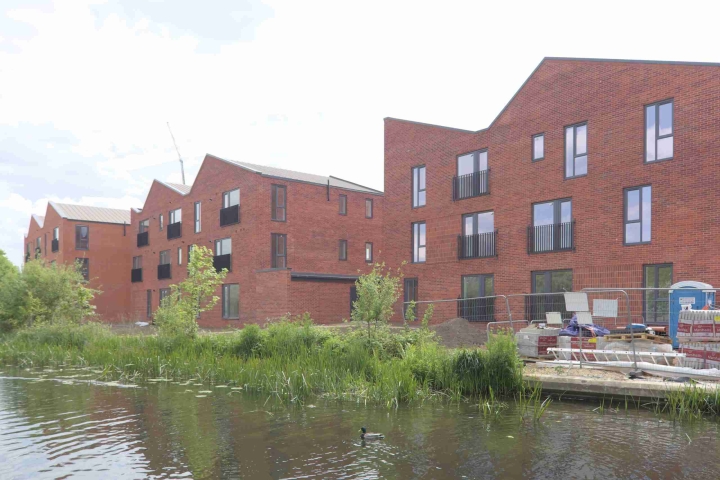
According to new research and policy recommendations from SAM Conveyancing, injecting billions of pounds into the new-build sector through government equity loans inflated house prices while doing little to stimulate construction.
The findings come as the government prepares to announce full details of its flagship ‘Your First Home’ programme in Chancellor John Healey’s Autumn Budget on 28 October 2026. The policy, championed by Prime Minister Andy Burnham, will offer first-time buyers in England a 20% government equity loan with a 2.5% deposit, specifically targeting those who cannot rely on family financial assistance.
However, analysis of official housebuilding statistics indicates that the government’s target of building 1.5 million homes over five years is severely off track. Since July 2024, exactly 250,520 new dwellings have been completed across the seven quarters of published data. This leaves the current administration running at an estimated annual rate of approximately 143,154 homes per year, less than half of the 300,000 annual completions required to meet its manifesto commitment.
The supply myth of government equity loans
Official figures from the Department for Levelling Up, Housing and Communities show that over 387,000 properties were purchased using the Help to Buy equity loan between April 2013 and March 2023, supporting 328,000 first-time buyers. While the programme assisted roughly 11% of all first-time buyers during that decade, it simultaneously created a captive market, accounting for between 35% and 50% of private new-build sales for major commercial housebuilders.
Rather than stimulating a sustainable surge in construction, housing delivery remained flat throughout the scheme. Data shows annual completions averaged just 152,791 dwellings per year between 2013 and 2023. At no stage did volumes approach the pre-financial crisis peak of 223,590 completions recorded in 2007. This sluggish output has persisted, with completions reaching 160,340 in 2024 and 164,250 in 2025.
Instead of boosting volume, government equity disproportionately inflated asking prices. HM Land Registry figures reveal that when Help to Buy launched in April 2013, the average new-build in England and Wales cost £208,086, compared to £163,745 for an existing home. By the time the scheme closed in March 2023, new-build values had soared by 70.1% to £353,867, comfortably outstripping the 65.6% rise across established homes.
Throughout the decade, buyers paid an average new-build premium of 28.1%, with peaks reaching 37.8%. By May 2026, the gap expanded to 40.1%, with new-builds averaging £396,889 compared to £283,194 for existing stock.
Andrew Boast, CEO of SAM Conveyancing, commented:
“Help to Buy was presented as a cure for Britain’s housing crisis, but the data proves it functioned primarily as a price-support mechanism for volume housebuilders. Over 387,000 homes were bought using the equity loan, and while that gave 328,000 first-time buyers an initial foothold, it also funnelled them into a captive market where developers simply baked that extra purchasing power straight into their asking prices.
“Housing completions remain stagnant, running at less than half of the government’s target. Repeating this policy by restricting the incoming ‘Your First Home’ scheme solely to new developments will not magically double our construction capacity overnight. It will simply pump billions in state support into developer balance sheets, leaving buyers to absorb an immediate 40% price premium alongside unresolved leasehold costs and tight 28-day exchange ultimatums.”
“Open equity loans to the secondhand market”
To prevent another artificial price bubble, SAM Conveyancing is urging the Treasury to widen the scope of the ‘Your First Home’ programme to encompass all property types across the secondhand market.
Allowing buyers to use government equity loans on established freehold houses and existing flats would transform the policy from a developer subsidy into a catalyst for organic market liquidity, Boast says.
“Thousands of existing homeowners are stuck in starter properties because incoming buyers struggle to raise conventional deposits. Opening the equity loan to existing properties allows first-time buyers to purchase established homes, freeing current owners to step up to larger properties and restoring natural fluidity across the entire chain.
“Purchasing an existing home also removes the instant depreciation that occurs when moving into a newly built development, protecting buyers from early negative equity. It also would help with reducing conveyancing costs and transaction stress, as urchasing established freehold properties bypasses the aggressive 28-day developer exchange ultimatums, long construction delays, and complex plot covenants that make new-build legal fees significantly higher.
“Finally, to protect the public purse and ensure sellers cannot artificially inflate asking prices, equity loans on secondhand homes should be strictly pegged to an independent valuation from a RICS-regulated surveyor at the point of purchase. Requiring the 20% equity stake to match professional valuation rather than an agreed sale price ensures complete transparency and prevents localised price bubbles.”
Boast concluded: “Britain does not just have a shortage of new houses; the entire property ladder is completely seized up. Pumping public cash exclusively into brand-new estates lines the pockets of big building firms, while everyday sellers who bought starter homes years ago are left stranded.
“If Chancellor John Healey genuinely wants to get Britain moving, he should let first-time buyers use this scheme on any property they choose. Backing purchases with independent professional valuations gives buyers real freedom, cuts out the developer red tape, and finally unfreezes the chains so first-time buyers can move in, and young families can move into their next home.”