
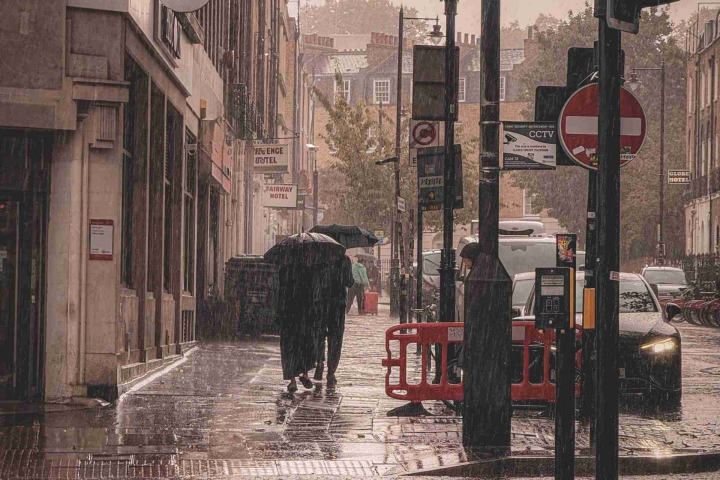
Autumn and winter in Britain bring plenty of grey skies, rainy days and chilly weather, but some parts of the country have it much worse than others. While residents in some towns still get a fair amount of sunshine during the colder months, others face weeks of wet weather with very little sunlight to make up for it.
With this in mind, premium appliance brand AEG examined Met Office data to reveal which UK areas experience some of the gloomiest weather conditions during autumn and winter.
The research compared rainfall, sunshine and humidity across 197 UK towns and cities between September and February. Each location was given a Gloom Score out of 100, with the highest scores indicating where residents experience the wettest, least sunny and most humid conditions combined during the colder months.
These are also the conditions that can make everyday jobs like drying washing outside particularly difficult.
The top 10 UK areas with the gloomiest weather conditions during autumn and winter:
|
Rank |
Area |
Country |
Gloom Score /100 |
Rainy days |
Rainfall (mm) |
Sunshine (hours) |
Humidity (%) |
|
1 |
Derry/Londonderry |
Northern Ireland |
86.8 |
102.9 |
638.7 |
366.5 |
85.8 |
|
2 |
Cumbernauld |
Scotland |
83.5 |
99.8 |
774.5 |
397.1 |
85.2 |
|
3 |
Rochdale |
England |
82.7 |
96.0 |
745.2 |
385.4 |
85.2 |
|
4 |
Burnley |
England |
82.6 |
95.4 |
693.6 |
381.3 |
85.5 |
|
5 |
East Kilbride |
Scotland |
80.0 |
97.2 |
781.7 |
418.3 |
85.2 |
|
6 |
Paisley |
Scotland |
79.3 |
96.3 |
767.0 |
406.9 |
85.0 |
|
7 |
Halifax |
England |
77.4 |
87.5 |
567.6 |
421.7 |
86.9 |
|
8 |
Lisburn |
Northern Ireland |
75.4 |
83.3 |
501.1 |
419.3 |
87.2 |
|
9 |
Oldham |
England |
75.1 |
93.5 |
652.9 |
390.7 |
84.7 |
|
10 |
Blackburn |
England |
74.5 |
95.2 |
682.0 |
405.5 |
84.7 |
Derry/Londonderry leads the ranking with a Gloom Score of 86.8 out of 100. According to the study, the city experiences an average of 102.9 rainy days between September and February, alongside just 366.5 hours of sunshine, the lowest sunshine total of all 197 locations examined. That leaves residents with very few opportunities to get their washing dry outside during the colder months.
Cumbernauld has the second-highest Gloom Score in the ranking, at 83.5. The study reveals that the Scottish town receives 774.5mm of rainfall across autumn and winter, with rain falling on an average of 99.8 days. Sunshine is also in short supply, with just 397.1 hours over the six months.
There are 96 rainy days on average between September and February in Rochdale, which comes third with a score of 82.7. The town gets 745.2mm of rain over those six months, alongside just 385.4 hours of sunshine, so residents have plenty of wet and gloomy weather to work around.
Burnley comes fourth with a score of 82.6 out of 100, and sunshine is in short supply here too. The town gets just 381.3 hours across autumn and winter, compared with the study average of 489.7 hours. That leaves residents with around 108 fewer hours of sunshine over the six months, making it particularly difficult to get clothes dry on the washing line.
There’s plenty of rain to contend with in East Kilbride, which comes fifth with a score of 80.0. The town gets 781.7mm of rain across autumn and winter, more than anywhere else in the top ten and 340mm more than the study average. With rain falling on 97.2 days, residents face wet weather for more than half of the six-month period.
Next is Paisley, scoring 79.3. According to the research, the town experiences 96.3 rainy days between September and February, alongside 767mm of rainfall. It also receives just 406.9 hours of sunshine, leaving relatively few bright hours across autumn and winter.
The weather isn’t much brighter in Halifax either, which comes seventh with a score of 77.4 out of 100. The town has an average of 87.5 rainy days across autumn and winter, around 15 more than the study average of 72.6 days. Average relative humidity is also high at 86.9%, adding to the damp conditions residents face during the colder months and making it harder for washing to dry even when it isn’t raining.
Lisburn ranks eighth among the areas with the gloomiest autumn and winter conditions, with a score of 75.4. According to the research, the city has average relative humidity of 87.2%, the highest figure in the top ten, and receives 501.1mm of rainfall between September and February.
Residents living in Oldham also face plenty of gloomy weather, with the town coming ninth in the main ranking. The study reveals that Oldham records 93.5 rainy days and just 390.7 hours of sunshine across autumn and winter, giving it a score of 75.1 out of 100. That doesn’t leave much room for making the most of the washing line before the rain returns.
Blackburn has the tenth-highest Gloom Score, at 74.5. According to the study, the town receives 682mm of rainfall across the six months, with an average of 95.2 rainy days. This means residents experience around 23 more rainy days than the average across the locations examined, with wet weather taking up a considerable part of autumn and winter.
The 10 UK areas with the most favourable weather conditions during autumn and winter
|
Rank |
Area |
Country |
Gloom Score /100 |
Rainy days |
Rainfall (mm) |
Sunshine (hours) |
Humidity (%) |
|
1 |
Southend-on-Sea |
England |
20.3 |
57.6 |
294.8 |
561.9 |
83.4 |
|
2 |
Clacton-on-Sea |
England |
22.6 |
59.2 |
303.3 |
575.9 |
84.0 |
|
3 |
Margate |
England |
25.0 |
62.3 |
342.5 |
583.5 |
84.2 |
|
4 |
Weymouth |
England |
25.3 |
70.8 |
518.2 |
612.8 |
83.3 |
|
5 |
Bognor Regis |
England |
26.0 |
67.4 |
465.3 |
617.4 |
84.1 |
|
6 |
Peterborough |
England |
27.3 |
58.2 |
303.8 |
537.5 |
84.0 |
|
7 |
Aberdeen |
Scotland |
27.7 |
72.7 |
453.7 |
492.7 |
81.0 |
|
8 |
Tynemouth |
England |
27.9 |
64.3 |
346.5 |
519.3 |
83.0 |
|
9 |
South Shields |
England |
28.4 |
64.0 |
337.1 |
523.4 |
83.3 |
|
10 |
London |
England |
28.6 |
62.9 |
361.4 |
507.8 |
82.8 |
Meanwhile, the study also highlights the UK areas where autumn and winter weather is a little more favourable, with fewer rainy days, more sunshine or lower humidity than elsewhere in the country.
At the other end of the ranking is Southend-on-Sea, which has the lowest Gloom Score in the study, at 20.3 out of 100. The city has an average of 57.6 rainy days between September and February, about 45 fewer than Derry. There’s considerably less rain overall too, at 294.8mm, roughly 54% less over the same six months. These conditions can also make it easier for residents to get their washing dry outside, even during the colder months.
Clacton-on-Sea takes second place with a score of 22.6, and although it has slightly more rainy days than Southend, at 59.2, it also gets more sunshine. There are 575.9 hours across autumn and winter, around 86 hours above the study average.
Third is Margate, scoring 25.0. The town has 583.5 hours of sunshine between September and February and 342.5mm of rain. Both figures are more favourable than the study average, giving residents a better chance of enjoying some brighter weather during the colder months.
Weymouth gets more rain than average, but that hasn’t stopped it coming fourth among the areas with the lowest Gloom Scores, at 25.3. Sunshine helps here. The town gets 612.8 hours across autumn and winter, around 123 more than the average across the places studied. That extra sunshine can make a difference when it comes to drying clothes outdoors, even if there are still plenty of rainy days.
Bognor Regis gets more sunshine than anywhere else in the study, with 617.4 hours between September and February, around 251 more than Derry. The town comes fifth in the ranking, with a score of 26.0 out of 100, showing just how much sunshine levels can differ across the country during the same six months.
There are fewer rainy days in Peterborough, which ranks sixth with a score of 27.3. The city has an average of 58.2 across autumn and winter, about 14 fewer than the study average, while rainfall comes to 303.8mm over the period.
Aberdeen is next, with a score of 27.7. What helps the city here is its relatively low humidity, averaging 81.0% across autumn and winter, the lowest figure of all 197 locations examined. Lower humidity can also help clothes dry more easily outdoors, even when temperatures are cooler.
Eighth place goes to Tynemouth, with a score of 27.9 out of 100 and an average of 64.3 rainy days between September and February. It gets 519.3 hours of sunshine over those months too, while relative humidity averages 83.0%.
South Shields follows in ninth, scoring 28.4 out of 100. Rainfall totals 337.1mm across autumn and winter, which is around 105mm less than the study average of 442.2mm, so residents have less wet weather to contend with than those in many other parts of the country.
Finally, London comes tenth with a score of 28.6, recording 507.8 hours of sunshine between September and February. The capital still has an average of 62.9 rainy days over those months, but that’s around 40 fewer than Derry. For Londoners hoping to save space indoors by hanging washing outside, that difference could mean more chances to make use of a dry day.
A spokesperson at AEG said: “It’s always nice when you can get the washing out, partly because it’s out of the house, but also for that fresh smell when you bring it back in. A tumble dryer or an airer will do the job indoors, but people still like being able to use the line when the weather allows.
“The trouble is, you can check the forecast, see there’s no rain coming and put everything out, only to find it’s still damp hours later. So it’s not necessarily the wettest places where people will struggle most.
“Derry is a good example of that. Several places in the top ten get more rain, but Derry has the least sunshine, just 366.5 hours between September and February. Bognor Regis gets 617.4 hours over those same months, which gives you an idea of how different the conditions can be.
“Weymouth gets more rain than average and still makes the top five easiest places to dry washing outside. There’s more sunshine there, and the humidity is relatively low too, so the rain on its own doesn’t tell you everything.
“People will still want to make the most of a dry day, even in winter. It just helps to know that the washing might need a bit longer indoors afterwards, rather than counting on it being dry when you bring it in.”