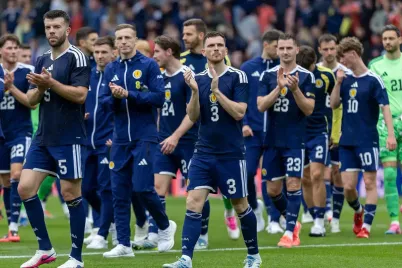

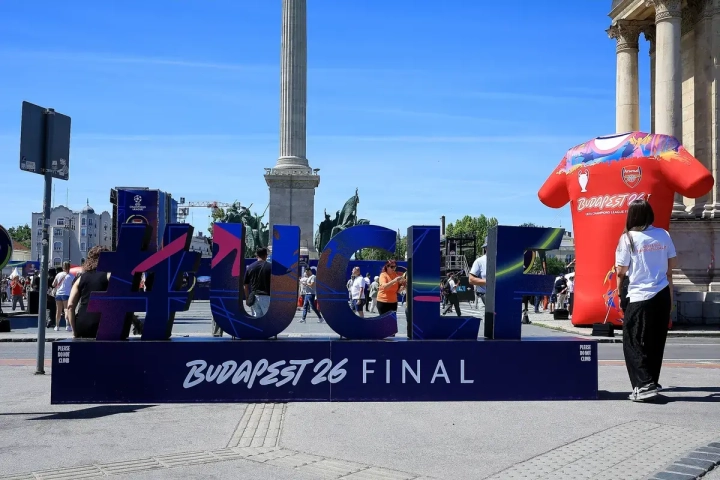
When Arsenal and Paris Saint-Germain walk out onto the turf at the Puskás Aréna in Budapest this Saturday, both clubs will be competing in their 63rd match since the start of June last year.
On paper, the physical toll appears identical. In reality, the two finalists arrive in Hungary having walked entirely different paths. While PSG’s domestic dominance allowed them to meticulously wrap their superstars in cotton wool, Arsenal were forced into a relentless, gruelling, season-long war of attrition to secure their first Premier League title in 22 years.
It sets up the ultimate sports science debate for European football’s showpiece event: What matters more in a Champions League final, physical freshness, or battle-hardened match sharpness?
The Parisian Luxury: A Masterclass in Load Management
Luis Enrique has enjoyed a luxury Mikel Arteta could only dream of. Having wrapped up their fifth consecutive Ligue 1 title with games to spare, despite a final-day hiccup against neighbours Paris FC, PSG have treated their domestic campaign as a heavily rotated warm-up act for Europe.
The numbers are staggering. Ousmane Dembélé, who has promised he is “100% fit” following a recent calf scare, started just 11 league matches this season. Club captain and defensive colossus Marquinhos was afforded the same rest, starting just 11 times in Ligue 1. Key figures like João Neves, Nuno Mendes, and Fabián Ruiz started only 13 games each.
In fact, 19-year-old sensation Warren Zaïre-Emery is the only PSG player to cross the 4,000-minute threshold across all competitions this season.
“The single most reproducible finding in elite football injury research is that fixture congestion drives muscle injuries,” explains Stephen Smith, CEO of Kitman Labs. “If you have played significantly fewer matches in your domestic league, your accumulative load is lower. PSG can statistically go into the game with a lower injury risk.”
Recognizing that resting players can occasionally lead to a lack of competitive edge, Enrique even orchestrated a high-intensity, 60-minute inter-squad friendly last weekend to simulate match conditions and keep his squad stimulated.
The Arsenal Engine: Running on Rhythm
Compare PSG’s curated calendar to the red side of North London. Traumatized by near-misses in recent years, Mikel Arteta relied heavily on a trusted core to finally drag his side over the Premier League finish line.
Five Arsenal players, William Saliba (4,134 minutes), Declan Rice, Gabriel Magalhães, Bukayo Saka, and Martin Zubimendi (4,269 minutes), have all smashed past the 4,000-minute mark. To put Arsenal’s workload into perspective, Jurrien Timber, who hasn’t kicked a ball since March, has still played more minutes (3,309) this season than almost every player in the PSG squad.
Yet, this relentless schedule has forged an invincible resilience. Arsenal are the only unbeaten team in the 2025-26 Champions League across 14 matches. They have conceded a measly two goals in six knockout-stage matches, with goalkeeper David Raya keeping nine clean sheets in the competition.
Even Luis Enrique conceded this week: “Off the ball, they’re the best team in the world, no doubt about it.”
Liberation vs. Expectation
If Arsenal’s legs are heavy, their minds are entirely unburdened. The emotional release of finally lifting the Premier League trophy has injected a wave of adrenaline into the squad.
“Confident? Yeah, for sure,” attacker Eberechi Eze said this week. “I feel like we’ve achieved something that means so much to us and the joy, the confidence, the power that comes with that is special. It’s quite liberating. It’s an opportunity to do something that has never been done before.”
Kai Havertz, who knows exactly what it takes to score the winning goal in a Champions League final, echoed that bullish sentiment: “We have been fighting on the highest level for a couple of years now and we have finally won the Premier League. That gives us a big boost. It doesn’t matter if you are an underdog or whatever. We are going to go on the pitch and are going to beat them.”
The Verdict
Saturday’s final presents a fascinating contrast of styles and preparations. PSG boast a frightening, free-scoring attack that has netted 44 Champions League goals this season, powered by incredibly fresh legs. Arsenal counter with the meanest defensive block in global football, fuelled by the momentum of a historic domestic triumph.
As Smith notes, “It is not a question of who is more rested, it is who has the right balance between recovery and stimulus.”
If the game stretches into extra time, PSG’s pristine load management could be the deciding factor. But if Arsenal can impose their suffocating tactical rhythm early on, their battle-hardened sharpness might just secure the ultimate prize.