
“Named in honour of Sir Henry Royce’s Chief Tester, the Eric Platford Testway reflects our constant endeavour to uphold the standards that have defined Rolls-Royce for more than a century. It represents a further investment in our pursuit of perfection, strengthening our ability to deliver the refinement, composure and effortless experience for which Rolls-Royce is renowned.”
Gunther Boehner, Director of Manufacturing, Rolls-Royce Motor Cars
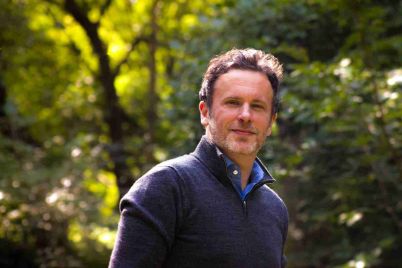
“It was an enormous privilege to officially open the new Eric Platford Testway at the Home of Rolls-Royce Motor Cars at Goodwood where more than 2,500 people are employed. The Testway is testament to the expertise of Rolls-Royce engineers and it was a pleasure to meet them and to understand the considerable research and technical innovation that has made it possible.”
The High Sheriff of West Sussex, Mr Gary Shipton, DL
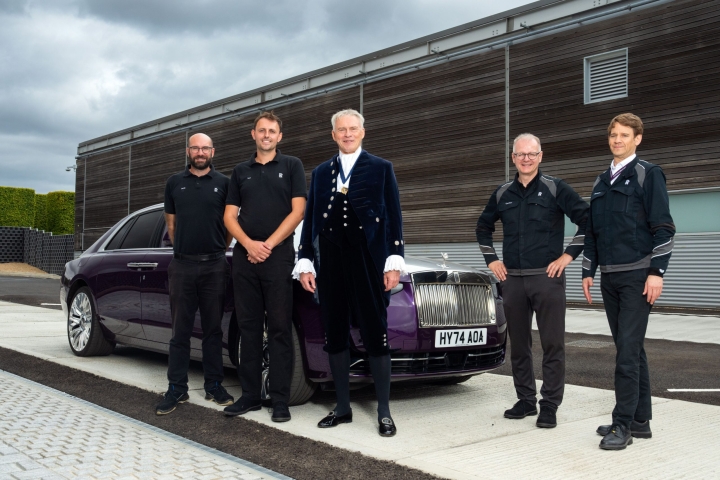
Rolls-Royce Motor Cars has inaugurated the Eric Platford Testway at the Home of Rolls-Royce at Goodwood, further advancing the marque’s pursuit of perfection and strengthening its exacting approach to quality and refinement. The Testway was officially opened by The High Sheriff of West Sussex, Mr Gary Shipton, DL, at an event hosted by Gunther Boehner, Director of Manufacturing, Rolls-Royce Motor Cars.
Named after Eric Platford, Sir Henry Royce’s first Chief Tester and one of the most influential figures in Rolls-Royce’s early history, the facility honours a man whose expertise helped establish the marque’s reputation for engineering excellence. Platford’s contribution extended beyond vehicle development: at the 1913 Spanish Grand Prix, his skill and judgement helped secure victory for Don Carlos de Salamanca, Rolls-Royce’s representative in Spain and one of the marque’s most important early clients. More than a century later, Eric Platford’s name serves as a fitting reminder that uncompromising standards and exceptional client relationships have always been central to Rolls-Royce.
The Eric Platford Testway forms an integral part of Rolls-Royce Motor Cars’ continuing investment in the Home of Rolls-Royce, where every motor car is built by hand to fulfil its client’s vision. The new testing facility enables engineers to introduce controlled inputs to the chassis, suspension, body structure and interior components in a repeatable environment. It comprises four parallel lanes, each 90 metres in length, which together offer eight distinct surface profiles designed to stimulate specific vehicle responses. The testing process involves two passes over each surface; at fixed speed and sweeping through speeds.
To support the marque’s constant focus on delivering an unrivalled client experience, the Testway surface profiles are designed to simulate driving experiences known to be encountered around the world. These include:
- Small and large cobblestone sections to identify potential rattles and assess ride composure
- ‘Random Concrete Waves’ with expansion joints at 2.4-metre intervals to introduce vertical variation
- Angled ‘Twist Humps’ designed to apply torsional load through opposing axle movement
- Paired ‘Railway Tracks’ generating sequential front and rear axle inputs
- Alternating circular iron covers to assess asymmetric response
- ‘Sine Waves’ corrugations measuring 12 mm in height and spaced 300 mm apart, producing high-frequency resonance
- Smooth tarmac
Turning areas at either end of the Testway provide the opportunity to test a ‘roundabout’ style change of direction; especially useful for testing stability of any loose personal items in the cabin.
Prior to entering the Eric Platford Testway, motor cars pass through an aero-acoustic chamber where static wind-noise intrusion testing is conducted using high-pressure, variable-speed air jets mounted on a movable gantry. This allows testing at simulated speeds exceeding the UK national speed limit of 70 mph (112 km/h), including conditions comparable to those encountered on unrestricted sections of road found in some markets.
Engineers will continue to validate a sample of vehicles on a longstanding eight-mile (13 km) route on local roads surrounding the Home of Rolls-Royce.