
For more than a millennium, one of England’s most important Anglo-Saxon monasteries has lain quietly beneath a Berkshire field. Now, thanks to a £249,755 grant from The National Lottery Heritage Fund, the story of Cookham Abbey is set to be uncovered on an unprecedented scale.
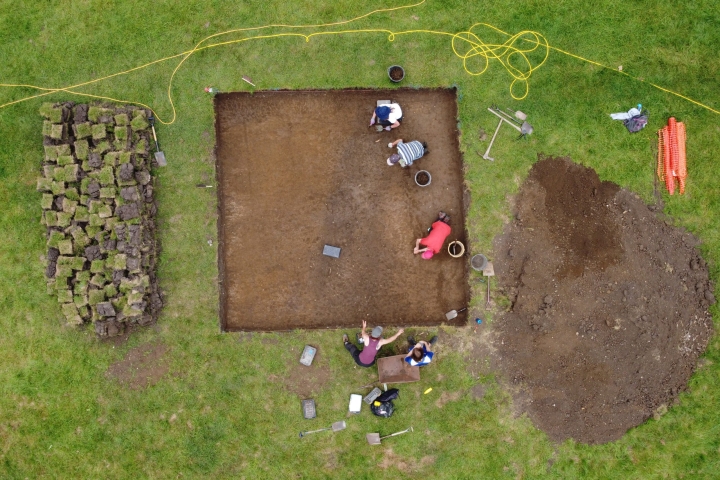
The abbey, ruled in the eighth century by Mercian Queen Cynethryth, was abandoned in the late ninth century. Since 2021, archaeologists from the University of Reading, working with Holy Trinity Church, Cookham, have been excavating the site, revealing an unexpectedly rich picture of early medieval life: finely preserved artefacts, a rare Anglo-Saxon watermill and dozens of burials from the monastery’s cemetery.
The new three-year programme, Cookham Abbey Connects, will deepen that research while opening it up to a far wider public. Funded by National Lottery players, the project will analyse both existing and future discoveries to build a detailed, evolving account of the monastery at its height – while actively engaging people who might never have set foot on an archaeological dig.
Professor Gabor Thomas, who leads the University of Reading’s excavations, explained how the grant would transform both research and outreach at the site:
“This funding is transformational for our ongoing research at Cookham Abbey. It will take understanding of this hugely significant site to a much deeper level and deliver a step-change in our public engagement work, especially with stakeholders in the local region.”
He added that the support would help cement the abbey’s wider importance.
“The Heritage Fund support will consolidate Cookham Abbey’s reputation as a key site for understanding monastic life at the beginnings of English Christianity and enable us to inspire and empower local communities to engage in this unique archaeological heritage.”
Cookham Abbey has already begun to capture public imagination. In 2025, the excavations featured in national news coverage and on Sandi Toksvig’s Hidden Wonders, where the presenter explored the site and its discoveries on camera.
Under the new project, research will sit alongside an ambitious programme of community engagement. A newly funded Interpretation Officer at the University of Reading will spend the next three years analysing finds and translating academic insight into stories designed for schools, local groups and national audiences alike.
Much of the focus will be on widening access to heritage – particularly among groups traditionally underrepresented in archaeology, including refugees, multi-faith communities and people with disabilities in Slough and Maidenhead.
Planned activities include a travelling archaeology roadshow bringing artefacts, virtual-reality experiences and storytelling workshops into schools, care homes and community venues; guided heritage walks linking the abbey to other historic and natural sites along the Thames; and a suite of online resources showcasing research findings, photographs and curated digital exhibitions.
Stuart McLeod, Director of England – London & South at The National Lottery Heritage Fund, said the project struck the right balance between scholarship and public connection.
“Thanks to National Lottery players, we are delighted to support the Cookham Abbey Connects project, which will share the remarkable story of this Anglo-Saxon monastery. Cookham Abbey is an extraordinary site of national significance, and this project will not only deepen academic understanding but also ensure that more people can discover and connect with the exciting heritage on their doorstep.”
The project will be delivered in partnership with the charity Friends of Cookham Abbey, which has already piloted engagement work with local schools and community organisations across East Berkshire.
After centuries underground, Cookham Abbey is no longer just being excavated – it is being reintroduced, carefully and creatively, to the people who live around it.