
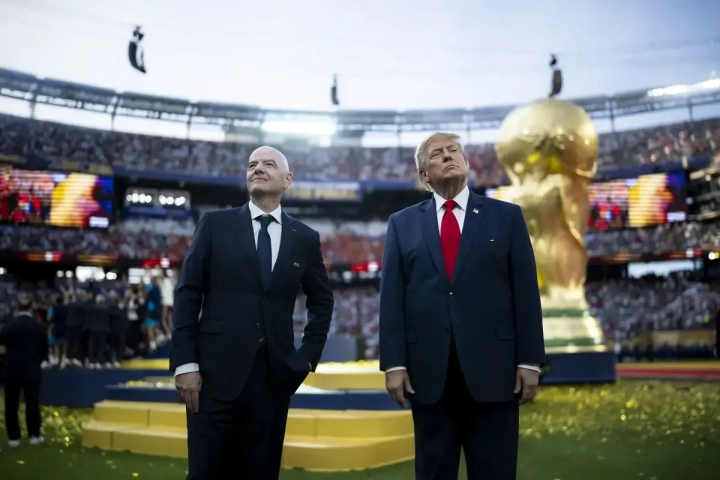
Global football stands on the precipice of an all-out institutional civil war. In a dramatic escalation of long-simmering tensions, the relationship between FIFA President Gianni Infantino and European football’s governing body, UEFA, has publicly and spectacularly fractured. Following a deeply controversial 2026 FIFA World Cup and the revelation of a bombshell plan to effectively privatise a slice of the sport’s most lucrative tournaments, the fragile truce between the two organisations has been utterly shattered.
At the heart of the current crisis is a fierce battle for the soul, and the immense financial resources, of the world’s most popular sport. As Infantino launches extraordinary public attacks against his critics and UEFA issues unprecedented condemnations of FIFA’s governance, the landscape of international football is facing its most significant upheaval since the ill-fated European Super League debacle.
The $20 Billion Bombshell: FIFA Forward Enterprise
The primary catalyst for the current breakdown in relations is a highly controversial proposal championed by Infantino to create a new commercial subsidiary: FIFA Forward Enterprise (FFE). Unveiled in late July, the expansive plan seeks to consolidate FIFA’s business operations and major event management into a single, massive entity valued at an astronomical $20 billion (£15.5 billion).
Under the proposed corporate structure, FIFA would retain a majority share, but critically, between 20 and 30 per cent of the subsidiary would be sold to private equity investors, raising up to $4.2 billion in immediate capital. To secure the backing of FIFA’s 221 member nations for this unprecedented sale, Infantino has proposed a one-off lump sum payment of $20 million to each national federation. This represents a substantial $12 million increase over their budgeted revenue for the upcoming 2027-2030 World Cup cycle. FIFA insists these funds are earmarked for vital long-term infrastructure projects, such as new stadiums, youth academies, and national training centres, particularly designed to aid developing footballing nations.
However, the prospect of private equity firms owning a non-controlling yet highly influential stake in the World Cup has provoked furious backlash from Nyon. UEFA immediately recognised the move as a direct, existential threat to the traditional governance model of the sport.
In an unusually blunt and scathing statement, UEFA declared that the game’s governing institutions had crossed a dangerous ethical line. “It is not FIFA’s to sell,” the European body explicitly stated. “None of us are the owners of football. The soul and governance of football are not assets to trade, especially with zero transparency as to who gains financially”.
The optics of the ambitious proposal have been further muddied by reports suggesting that the creation of FFE could result in a massive financial windfall for Infantino himself. Some estimates suggest the restructure could potentially increase his current $6 million annual salary tenfold. For a president whose first act in 2016 was to conspicuously fly easyJet to demonstrate that FIFA officials “have to behave like normal people” in the wake of the Sepp Blatter corruption scandals, the sudden shift toward multi-billion-dollar private equity deals has struck a profoundly discordant note among European administrators.
A World Cup Marred by Controversy
The financial dispute arrives against the backdrop of an intensely scrutinised 2026 World Cup co-hosted by the United States, Canada, and Mexico. While FIFA has repeatedly heralded the expanded 48-team tournament as a resounding triumph for global inclusion, the event was heavily marred by political interference, logistical failures, and officiating controversies that directly exacerbated the existing friction with UEFA.
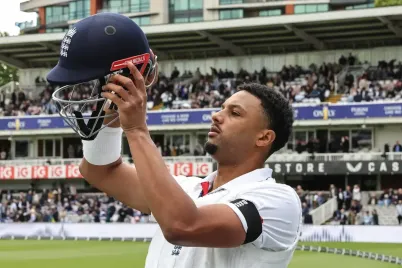
The defining flashpoint occurred when FIFA made the unprecedented decision to lift a mandatory one-match suspension for United States forward Folarin Balogun ahead of a crucial last-16 tie against Belgium. The shocking reversal, which reportedly followed direct intervention from US President Donald Trump, provoked absolute outrage in Europe. UEFA publicly condemned the ruling as “unprecedented, incomprehensible, and unjustifiable,” arguing that it fundamentally undermined the integrity and credibility of the competition while creating a dangerous precedent for political meddling.
Beyond the Balogun incident, the tournament faced widespread criticism regarding visa issuance, heavy-handed policing, and travel logistics. Iran head coach Amir Ghalenoei labelled his squad the “most oppressed” team at the tournament after facing severe visa delays, the denial of entry for key staff, and the sudden cancellation of fan ticket allocations. Similar logistical nightmares plagued travelling supporters from Haiti, Senegal, and Ivory Coast, while Somali referee Omar Artan was notoriously refused entry by US border authorities despite travelling on a diplomatic passport. The conspicuous presence of Immigration and Customs Enforcement officers at various stadiums only added to the uneasy atmosphere surrounding the event.
Infantino’s Extraordinary Defence
Rather than adopt a conciliatory tone in the face of these compounding controversies, Infantino opted for outright defiance. In late July, the FIFA president utilised his personal Instagram account to publish a 15-part open letter aimed directly at his numerous detractors.
Accusing critics of “planting seeds of hate” and spreading “false rumours,” Infantino astonishingly claimed that the massive tournament experienced “zero incidents, zero violence, 100% safety and security, only joy and happiness”. He summarily dismissed the widespread visa complaints by pointing to the millions of fans who successfully entered the host nations, and vigorously defended the Balogun decision by claiming such disciplinary practices are “routine and widely accepted” in major domestic leagues across the globe.
“To those spending their time and energy hating us, please take a moment to reflect, meditate, pray or watch a football match and truly observe the faces, the eyes, the emotions,” Infantino wrote in his concluding slides.
The extraordinary rant was widely perceived by European stakeholders as the actions of a leader increasingly divorced from the reality of his own unpopularity. UEFA officials, already seething over the Balogun affair, viewed the unapologetic dismissal of legitimate governance concerns as further evidence of FIFA’s erratic and opaque leadership style. In a symbolic show of rebellion, UEFA recently announced new, strict red lines regarding the use of the Video Assistant Referee (VAR) system for the 2026/27 European season, actively distancing their own officiating protocols from those controversially utilised by FIFA during the World Cup.
A History of Institutional Animosity
While the current FFE proposal and the World Cup fallout represent the immediate triggers for this civil war, the animosity between FIFA and UEFA is deeply entrenched in a broader historical battle for absolute financial supremacy.
Since succeeding Sepp Blatter a decade ago, Infantino, himself a former UEFA general secretary, has consistently sought to challenge Europe’s total financial dominance over club football. UEFA currently generates nearly €5 billion annually from the UEFA Champions League, a figure projected to rise by 20 per cent following recent, highly lucrative media rights sales. In stark contrast, the vast majority of FIFA’s $14 billion four-year revenue cycle is entirely reliant on the men’s World Cup.
To bridge this financial chasm, Infantino spearheaded the creation of the expanded, 32-team FIFA Club World Cup, which debuted in the United States in 2025. UEFA has long viewed the expanded Club World Cup as an aggressive, direct challenge to the supremacy of the Champions League.
| Metric | FIFA | UEFA |
| Primary Revenue Driver | Men’s FIFA World Cup (Quadrennial) | UEFA Champions League (Annual) |
| Estimated Revenue | $14 Billion (over a 4-year cycle) | €5 Billion (Annually) |
| Current Major Initiative | FIFA Forward Enterprise ($20bn Valuation) | Expanded Champions League Format |
| Core Leadership | Gianni Infantino (President) | Aleksander Čeferin (President) |
For a brief period leading into 2026, a fragile truce existed. Both Infantino and UEFA President Aleksander Čeferin are seeking re-election next year and had seemingly agreed to minimise public infighting to project stability to their respective memberships. However, the sheer magnitude of the $20 billion private equity plan, combined with the unprecedented political interference witnessed during the World Cup, has permanently dismantled that diplomatic facade.
The Public and Stakeholder Reaction
The fallout from these competing statements has been swift and deeply cynical. Across digital platforms and supporter forums, the reaction from fans has heavily mirrored UEFA’s concerns regarding the hyper-commercialisation of the sport.
Supporters groups across Europe have openly mocked Infantino’s claims of a hate-driven media conspiracy, pointing out the inherent contradiction in a president preaching global unity while simultaneously attempting to sell stakes in the World Cup to private equity firms. “That’s capitalism in a nutshell now that private equity has a hold of everything,” noted one highly upvoted comment on a prominent online football community, encapsulating the prevailing mood of the international fanbase.
The profound alienation felt by European stakeholders is not limited to administrators and fans. Player unions have also watched the escalating war of words with severe trepidation. While FIFPro and various European unions recently reached a temporary memorandum of understanding with FIFA regarding player workload and the congested match calendar, the fundamental lack of trust remains palpable. The players are the ones expected to deliver the on-pitch product that generates the proposed $20 billion valuation, yet they have been entirely excluded from the financial restructuring discussions.
The situation bears striking similarities to the European Super League fiasco of 2021, where elite clubs attempted to ring-fence the sport’s wealth. The irony that FIFA, which fiercely opposed the Super League alongside UEFA, is now attempting to initiate its own corporate sell-off of the sport’s premier international competition has not been lost on the European public.
Many observers are now openly questioning whether the current institutional framework of global football is sustainable. Prominent voices within the European game are urging UEFA to flex its substantial political and financial muscles. The European confederation provides the vast majority of the top-tier talent that makes the World Cup a multi-billion-dollar spectacle; without the participation of nations like France, Spain, Germany, and England, the valuation of the FIFA Forward Enterprise would instantly collapse.
While a formal breakaway remains a nuclear option, the sentiment among supporters is increasingly supportive of UEFA taking drastic action. The consensus among the European fan base is that Infantino has leveraged the power of smaller, developing federations to effectively dismantle the traditional governance of the game in pursuit of unprecedented profit.
The Player Workload Equation
Interestingly, amidst the fierce institutional warfare with UEFA, FIFA recently managed to extinguish one significant governance fire. In early July 2026, European player unions from 17 nations, including major powers like France, Italy, and the Netherlands, abruptly withdrew their support for a class-action lawsuit against FIFA regarding player workload and the congested international match calendar.
The lawsuit, originally backed by the global players’ union FIFPro, was viewed as a severe threat to FIFA’s expansionist policies, particularly concerning the newly bloated Club World Cup and the 48-team World Cup. However, Infantino successfully brokered a new memorandum of understanding with the unions, valid until December 2031, which reportedly grants players a greater consultative role in future calendar discussions. While this governance agreement appeased the player unions and removed an immediate legal hurdle for FIFA, it did little to soothe the anxieties in Nyon. UEFA views FIFA’s ability to divide and conquer stakeholders as a testament to Infantino’s ruthless political manoeuvring.
The Road Ahead
As European domestic leagues prepare for the 2026/27 season, the institutional landscape of the sport remains incredibly volatile. UEFA is currently exploring various legal avenues to support the Belgian Football Association’s anticipated appeal regarding the Balogun decision at the Court of Arbitration for Sport (CAS). Concurrently, UEFA must aggressively rally its 55 member associations to form a unified, formidable opposition to the FIFA Forward Enterprise proposal before Infantino can secure the necessary global votes to definitively ratify the sale.
The sport finds itself at a perilous crossroads. On one side stands a FIFA president determined to fundamentally commercialise the international game and centralise global power, emboldened by the prospect of private equity billions. On the other stands a deeply entrenched European establishment, fiercely protective of its own lucrative ecosystem and increasingly alarmed by the rapid erosion of traditional sporting governance.
As the battle lines are drawn ahead of the crucial 2027 election cycle, the outcome of this multi-billion-dollar dispute will inevitably dictate the financial, political, and moral direction of world football for generations to come.