
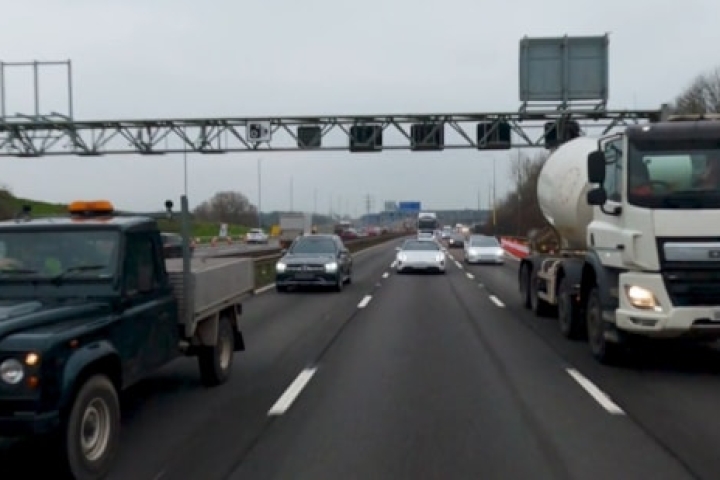
Drivers in the South West region are rated the best in the country for road manners – but National Highways is still urging drivers to leave space as tailgating remains a major danger, contributing to 85 serious incidents on the region’s motorways and major A-roads last year.
Despite Britain priding itself on politeness and consideration, millions of drivers feel their day-to-day manners worsen when they are driving as new research from National Highways reveals widespread tailgating, and declining road etiquette.
Almost 5 million drivers nationally say their manners slip behind the wheel when they’re under pressure, especially when running late.
A further 2.4 million admit tailgating deliberately to push slower drivers to speed up.
In the South West, 31% admit to tailgating – showing how common the behaviour remains.
National data suggests that running late is the biggest trigger for poor driving etiquette (27%), followed by tiredness (20%) and peak-time commuting (16%).
With 46% of drivers rating road etiquette in the region as good, the South West ranks first out of six regions across England in National Highways’ new ‘manners map’ that highlights where behaviours are better and where they fall short.
Colin Stevenson, Road Safety Information Lead at National Highways, said:
“While the regional picture varies it’s clear that tailgating remains a real concern. It may seem harmless, but it can put everyone on the road at risk. Following too closely means there is less time to react and stop safely if the vehicle in front slows down or stops.
“Leaving a safe gap makes driving safer, keeps traffic moving more smoothly, and is a simple courtesy that helps everyone feel more relaxed behind the wheel. A good rule of thumb is the two second rule, which should be doubled in wet conditions or when visibility is reduced.”
Nationally, tailgating contributes to around 8% of people killed or seriously injured each year on motorways and major A-roads, based on long term Department for Transport data.
Dr Neale Kinnear, a behavioural psychologist specialising in driving behaviours, said:
“Most of us see ourselves as considerate people, but driving is a unique context. It’s goal focused and often time pressured. When we’re running late or behind other traffic, frustration can build. In that moment, closing the gap can feel like taking control or making progress.
“The reality is different. Drivers tend to overestimate how much time, if any, they save by pushing on. As frustration rises, perspective on the importance of keeping a safe margin, and the impact it has on others can be lost.”
The Highway Code advises drivers to leave at least a two second gap from the vehicle in front on faster moving roads. This allows time to think and stop safely.
Tailgating is also an offence. Police can take action if they believe a driver is too close to the vehicle ahead, which can result in a £100 fine and three penalty points.